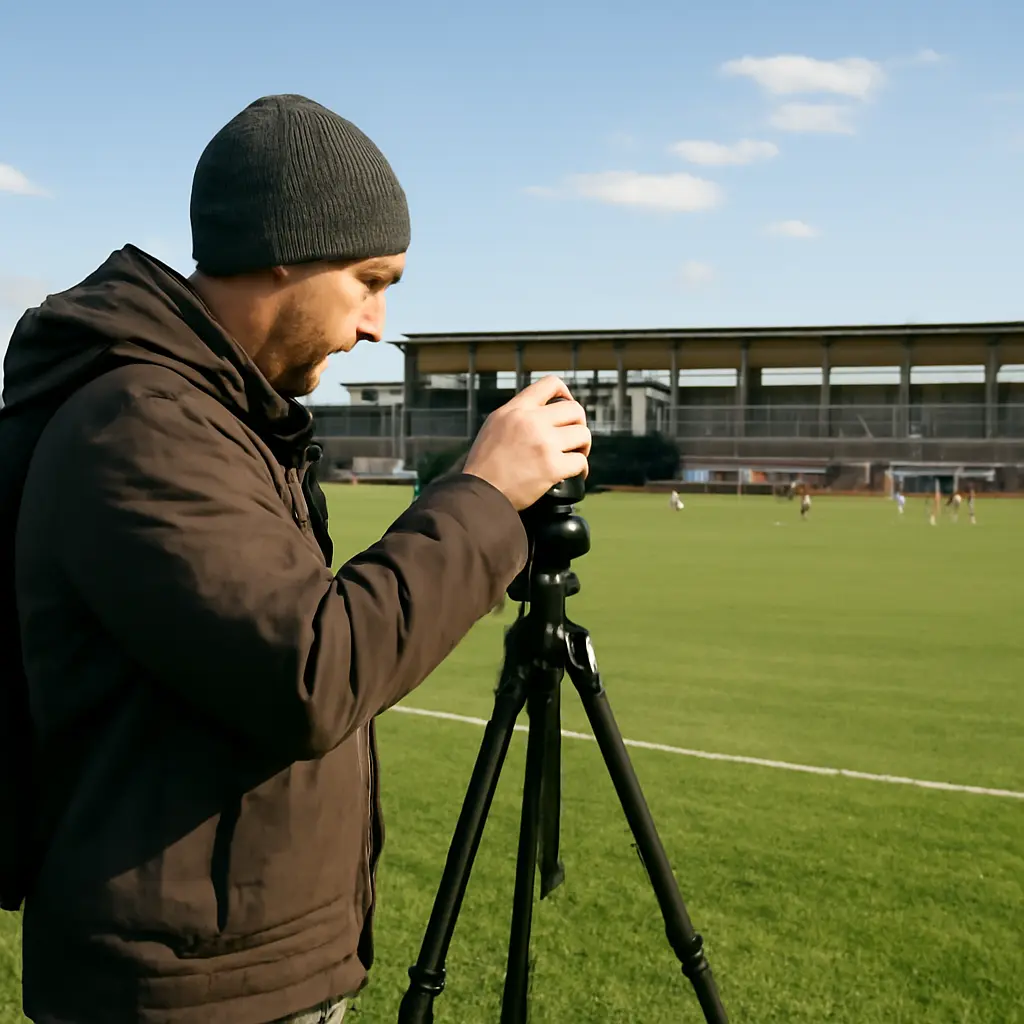
Professional shooters lock exposure before releasing the shutter because a camera’s automatic meter can change brightness from frame to frame—even when the subject and intended look stay the same. Exposure lock, manual exposure, and deliberate metering help keep a sequence consistent, protect important highlights, and let photographers prioritize timing and composition. The technique matters most in changing or misleading light, from backlit portraits to sports under stadium lamps; it is not a universal rule, but a way to prevent automation from making an unwanted decision at the decisive moment.
Exposure consistency explains why photographers lock exposure before shooting
Exposure is the amount of light recorded by the sensor, controlled primarily through aperture, shutter speed, and ISO. In its photography guidance, Nikon describes exposure as the result of balancing these three settings; changing any one can affect brightness, motion rendering, or depth of field. “Locking exposure” broadly means fixing the camera’s exposure decision for a shot or sequence instead of allowing the meter to revise it unpredictably.
That broad idea has several forms: using the camera’s auto-exposure lock (AE-L) button, switching to manual exposure, selecting a metering mode that better suits the subject, or using exposure compensation to correct a consistent metering bias. These are related tools, not synonyms. AE-L temporarily holds an automatic exposure reading, while manual exposure keeps the photographer-selected settings in place until they are changed.
The reason is simple: a reflective meter measures light and estimates how to render the scene, but it does not know which parts of the frame matter most. A bright jersey, a dark background, or a patch of sky entering the composition can shift the reading. Locking exposure prevents those changes in framing from automatically changing the recorded brightness.
Exposure lock keeps a sequence visually consistent
AE-L is a camera function that holds a meter-derived exposure temporarily, commonly while the photographer recomposes or takes a frame. A typical example is portraiture: meter the face, press AE-L, recompose with the person off-center, and shoot. Without the lock, the camera might include a bright window or dark clothing in its new calculation and alter the exposure.
Consistency is especially valuable when making a burst of sports images, a portrait series, or a panorama. If automatic exposure changes between frames, adjacent images may have noticeably different brightness, creating extra correction work during editing or visible seams when images are stitched. Locking is useful when the light on the subject is stable; it should be released or reset when the light itself changes.
Manual exposure makes the photographer’s decision persistent
Manual exposure is a camera mode in which the photographer sets shutter speed, aperture, and usually ISO rather than letting the meter continuously choose them. The meter remains useful as a reference, but it does not override those settings. This makes manual exposure a natural choice for a fixed lighting setup or a sequence where the framing changes but the light on the subject does not.
For example, a sports photographer may choose a fast shutter speed to limit motion blur and an aperture that provides the desired subject separation, then set ISO to achieve an appropriate exposure. As athletes move across a field with consistent illumination, the camera will not brighten or darken each frame merely because the background changes from green turf to dark stands.
Metering behavior shows when exposure should be locked
Metering is the camera’s process for evaluating scene brightness and recommending or selecting exposure settings. Nikon’s educational material distinguishes common approaches such as matrix or evaluative metering, center-weighted metering, and spot metering. Their names and behavior vary by camera maker, but the underlying choice is similar: measure a broad scene, emphasize a central area, or read a small region.
A meter is not “wrong” when it produces an unexpected result; it is responding to the tones it sees according to its design. The photographer must decide whether the subject should be rendered brighter, darker, or consistently exposed across a sequence. Understanding that distinction connects metering technique to the practical reasons professionals use exposure lock.
Backlighting can mislead an automatic meter
Backlighting occurs when a strong light source or bright background sits behind the subject. A camera that gives substantial weight to the bright sky may reduce exposure, leaving a face too dark. The photographer can meter the face and lock that reading, use exposure compensation, or switch to manual exposure if the lighting remains stable.
The choice depends on the goal. Exposing for a person may allow highlights in the sky to lose detail; protecting the sky may leave the face in shadow. Exposure lock does not expand the sensor’s dynamic range or solve every lighting problem. It simply prevents the meter from changing its decision as composition shifts, leaving the photographer to choose the trade-off deliberately.
Spot metering isolates a small, important subject area
Spot metering measures a small portion of the frame, which can help when a face, bird, or stage performer is much brighter or darker than the surroundings. A photographer can place the spot over the key subject area, take a reading, and lock it before recomposing. Because spot readings are sensitive to where they are aimed, careful placement is essential.
This method is useful in theatre, wildlife, and other scenes with strong contrast, but it is not automatically more accurate than broader metering. A meter interprets reflected light, so a very dark or bright subject can produce a reading that does not match the photographer’s intent. Checking the histogram and highlight warnings, when available, provides an additional way to assess the result.
Exposure control supports timing, motion, and image quality
Professional photographers often have to solve several problems at once: preserve a shutter speed for action, maintain a chosen depth of field, and keep exposure steady while the subject moves. Locking exposure separates those creative decisions from the camera’s changing interpretation of the background. It is particularly useful when a subject crosses areas with different tones but similar illumination.
The exposure triangle explains the trade-offs. A faster shutter speed can freeze motion but reduces the light reaching the sensor; a wider aperture admits more light but narrows depth of field; increasing ISO allows a given shutter speed and aperture in darker conditions but can increase visible noise. Exposure lock does not remove these trade-offs—it helps keep the chosen balance from drifting unexpectedly.
Sports and event photography benefit from predictable settings
In sports, the background can change dramatically as a player runs past stands, advertising boards, or patches of shadow. If the subject remains under consistent light, manual exposure or AE-L can keep the athlete’s brightness stable across a burst. The photographer can then concentrate on focus, framing, and the moment rather than correcting meter fluctuations after every frame.
Indoor events introduce a related challenge: artificial lights may vary in brightness or color, and some venues use flickering sources. Exposure lock can prevent composition-driven changes, but it cannot eliminate light flicker. Photographers may need to test shutter speeds, use anti-flicker features where available, or adjust settings when moving between differently lit areas.
Stable exposure can simplify panoramas and editing
A panorama is assembled from multiple overlapping frames, so large exposure differences can make transitions visible. Holding exposure, white balance, and focus steady where practical helps the frames match. Exposure lock is one option; manual exposure is often more reliable if the scene’s light is uniform and the camera will be turned across areas with different brightness.
Consistent exposure also reduces repetitive correction when editing a series. It does not guarantee identical files—light can change, subjects can move, and automatic ISO or other settings may still vary depending on the camera’s configuration—but it removes one common source of variation: the meter recalculating because the composition changed.
Exposure lock is a tool, not a rule
Locking exposure is less useful when the light changes quickly, such as moving from sunlight into deep shade, or when the subject itself moves through different illumination. In those conditions, a locked reading can become stale. Aperture-priority or shutter-priority automation, auto ISO, exposure compensation, or a fresh meter reading may better accommodate changing conditions.
A practical workflow is to identify the subject and the light falling on it, choose the shutter speed and aperture required by the image, meter a meaningful area, and then decide whether to lock the reading or use manual exposure. Review the histogram or highlight alerts, and recheck exposure whenever the lighting—not merely the composition—changes.
Conclusion: deliberate exposure protects the photographer’s intent
Professionals lock exposure because camera meters respond to the tones and framing they encounter, while photographers need control over the subject, motion, and consistency. AE-L holds an automatic reading; manual exposure makes chosen settings persistent; and metering modes help determine which part of a scene informs the decision. Together, these tools are especially useful for backlit subjects, sports, events, and panoramas.
The broader lesson is not to lock every shot, but to recognize when automatic metering may change for the wrong reason. Practice with a backlit portrait and a short action sequence: compare automatic exposure with a locked or manual approach, then inspect the results. That simple exercise builds the judgment to let automation help when conditions change—and take control when consistency matters.
Sources: Nikon, Exposure: The Exposure Triangle, https://www.nikonusa.com/learn-and-explore/c/tips-and-techniques/the-exposure-triangle; Nikon, Understanding Metering, https://www.nikonusa.com/learn-and-explore/c/tips-and-techniques/understanding-metering; Canon Europe, Exposure Compensation, https://www.canon-europe.com/pro/stories/exposure-compensation/